
Why the bathroom is the toughest room in the house
The bathroom is the one room in the home that is, by design, wet every single day. Showers, baths, sinks and toilets all combine to create an environment that is warm, humid and constantly re-inoculated with the things that cause problems — soap scum, hard water minerals, body oils, bacteria and mould spores.
For Newcastle homes, the coastal climate adds another layer. Salt air, humidity and the temperature swings between a hot shower and a cool evening create the conditions mould loves. A bathroom that's not actively managed will go from clean to grimy in weeks, and from grimy to permanently marked in months.
This guide walks through every surface in a domestic bathroom and laundry — what to clean, how to clean it, how often to clean it, and the detail zones that decide whether a bathroom looks fresh or tired. The good news is that, once you understand the system, the daily upkeep is small and the periodic work is predictable.
The bathroom's three enemies
Before the cleaning system, it helps to understand what you're actually fighting. The bathroom has three distinct enemies, and each needs a different approach:
Soap scum. A white, waxy film that builds up on shower glass, taps and tiles. It's the reaction of soap (specifically the talc and fats in it) with hard water. Soap scum isn't dirt — it's a chemical residue. The fix is a slightly acidic cleaner (vinegar or a dedicated limescale product) and a non-scratch sponge. Body washes and liquid soaps leave less scum than bar soap.
Hard water staining. Newcastle water is moderately hard, which means every shower and tap leaves a mineral deposit. Over time, these deposits build into a crust on showerheads, taps and glass. Left too long, they etch the surface and become permanent. The fix is a mild acid (vinegar or citric acid) — and regular squeegeeing to prevent the deposit forming in the first place.
Mould. The black spots that appear in grout, silicone joins and on the ceiling. Mould needs three things: moisture, warmth and a food source (soap residue, skin cells, dust). The fix is to break the triangle: ventilate to remove moisture, clean to remove the food source, and treat the mould itself with a product that penetrates rather than just bleaches.
Understanding these three tells you why a "spray and walk away" approach fails. A spray that handles soap scum doesn't touch mould. A bleach that whitens mould doesn't dissolve hard water scale. A proper bathroom clean addresses all three, separately and deliberately.
The daily reset: 90 seconds that save the weekend
The single most effective bathroom habit is the post-shower squeegee. Ninety seconds a day keeps shower glass clear for years and prevents the hard water build-up that becomes a project to remove.
The daily reset:
- Squeegee the shower glass and tiles. One pass down each panel of glass, one pass across the tiles. A damp squeegee picks up the water before it dries and leaves minerals behind.
- Leave the door open or the fan running. Twenty minutes of ventilation after a shower is the single most effective anti-mould measure. The fan should run during the shower and after, not just during.
- Hang towels fully spread. A bunched towel stays damp for hours and grows that sour smell. Spread it out so it can dry.
- Quick basin and toilet wipe. A damp microfibre wipe of the basin and a wipe of the toilet seat takes 30 seconds and keeps the high-touch surfaces sanitary.
That's the whole daily reset. The compounding effect is that a squeegeed, ventilated bathroom never reaches the state where a deep clean becomes a project.
Weekly clean: the full pass
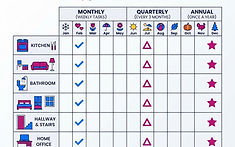
Once a week, the bathroom needs the full pass. A sensible order, working top to bottom:
Ceiling and exhaust fan. Vacuum the exhaust fan grille — a dusty fan is a fan that doesn't pull moisture. A quick wipe of the ceiling with a microfibre cloth on a broom handle catches the cobwebs and the first signs of mould.
Walls and tiles. Spray and wipe, working in sections. For tiled showers, a 1:1 vinegar-water spray handles soap scum; for heavy build-up, a dedicated bathroom cleaner with limescale action. Agitate grout lines with a grout brush or an old toothbrush.
Shower screen and glass. Squeegee first to remove loose water, then spray and wipe. For streak-free glass, the two-cloth method is unbeatable — one damp to clean, one dry to polish. A microfibre glass cloth (the kind sold for car windows) is worth the small investment.
Shower base and bath. A non-scratch scourer with a cream cleaner lifts the soap scum that builds on the base. Don't use the scourer on acrylic baths — they scratch. For acrylic, a soft cloth and a dedicated acrylic cleaner.
Taps, showerhead and fittings. Chrome and stainless polish up with a microfibre cloth and a drop of white vinegar. For a scaled-up showerhead, remove it and soak in vinegar overnight, or tie a vinegar-soaked bag around it if it can't be removed. The difference in water flow is remarkable.
Basin and vanity. Empty the basin, give it a non-scratch scrub, and wipe the vanity top. The tap base — where it meets the basin — is a classic spot for green discolouration; a bicarb paste and an old toothbrush will lift it.
Toilet. Inside: the bowl, under the rim, and right up into the S-bend (use the toilet brush). Outside: the seat, hinges, base and the floor behind — the floor behind the toilet is one of the most-missed zones in the house.
Mirror. Spray and wipe with the two-cloth method. Avoid getting cleaner on the frame — it can mark it.
Floors. Sweep or vacuum first (the floor will have hair, dust and the day's debris). Mop with a pH-neutral floor cleaner appropriate to your surface. Pay attention to the corners and under the vanity.
Monthly: the zones that quietly accumulate
Once a month, the bathroom needs attention in the zones that build between weekly cleans:
Exhaust fan deep clean. Remove the grille, vacuum the fan blades, and wash the grille in soapy water. A properly functioning fan is the single most effective anti-mould tool in the room.
Drains. Pour a kettle of boiling water down each drain, followed by half a cup of bicarb and half a cup of vinegar, then more boiling water after 10 minutes. For a slow drain, a plastic drain snake (not chemicals — they corrode the pipes) pulls out the hair-and-soap mass that's the usual cause.
Behind the toilet and under the vanity. The two most-missed zones in any bathroom. A vacuum with a crevice tool, then a damp wipe. The dust that collects behind a toilet is genuinely surprising.
Inside the vanity and medicine cabinet. Empty it, wipe the interior, check expiry dates on medications and skincare, and declutter. A bathroom cabinet accumulates expired products faster than any other room in the house.
Shower screen tracks. If your screen has tracks (sliding doors), the tracks collect a black grime. A dedicated track-cleaning brush or a wrapped screwdriver with a microfibre cloth gets into the channel.
Seals and silicone joins. Wipe every silicone join with a mould-killing product. The join between the bath and the wall, the shower base edge, and the basin join are the mould-prone spots. If the silicone is already black through the join, no surface treatment will fix it — it needs to be cut out and re-sealed (see the annual section).
Quarterly: the detail pass
Every three months, the bathroom needs a detail pass that mirrors a professional deep clean. This is the work that keeps a bathroom looking new:
Grout and tile restoration. A dedicated grout cleaner, applied with a stiff-bristled brush (not metal), lifts the discolouration that builds over months. Work in small sections, agitate, let the product dwell, and rinse thoroughly. For grout that won't come clean, a grout colour restorer or re-sealer is the next step — sealing should be done every 1-2 years depending on use.
Showerhead full descale. Remove the showerhead, soak in a 50/50 vinegar and water solution for a few hours, then scrub the nozzles with an old toothbrush. Reassemble and run the shower for a minute to flush. The improvement in spray pattern and pressure is often dramatic.
Behind and under fixed fittings. The towel rails, the toilet roll holder, the shower screen hinges — all have shadow zones behind them. A damp microfibre cloth and a bit of patience gets them all.
Walls and ceiling for mould. A wipe-down with a mould-killing product on the ceiling and upper walls catches the mould you can't quite see yet. In a coastal Newcastle bathroom, this quarterly pass is what stops the ceiling from going pink and then black.
Laundry — if applicable. The washing machine (run a hot wash with a washing-machine cleaner or a cup of vinegar on the empty cycle), the dryer (vacuum the lint filter housing, not just the removable filter), the laundry sink, and behind the machines. The floor behind the washing machine is a classic dust-trap.
Annually: re-seal and remediate
Once a year, the bathroom benefits from work that's beyond weekly or monthly scope:
Silicone re-seal. If the silicone around the bath, shower base or basin is black through the join, the mould is inside the silicone, not on it. No amount of cleaning fixes it. The old silicone needs to be cut out (with a craft knife or a silicone-removal tool), the surface cleaned and dried, and new mould-resistant silicone applied. Allow 24 hours to cure before the area gets wet. This is a half-day job for a competent DIYer, or a quick professional job.
Grout re-seal. Grout sealer wears off over time. A re-seal once a year (or every two years for a lightly used bathroom) keeps the grout non-porous and prevents the discolouration that becomes permanent.
Exhaust fan check. The fan should be strong enough to hold a sheet of paper to the grille. If it isn't, it's either clogged or worn out — a clogged fan can be cleaned, a worn one replaced. A bathroom fan that doesn't pull moisture is the single biggest cause of recurring mould.
Window and screen channel clean. If the bathroom has a window, the channel collects water and grows grime. A vacuum with a crevice tool, then a damp wipe, keeps it clear.
How Hearts Cleaning can help
If your bathroom has slipped past what a weekly clean can recover — mouldy silicone, discoloured grout, scaled glass, a tired vanity — that's exactly what our deep cleaning is built for. Our bathroom deep clean is $88 per cleaner per hour including chemicals, with a four-hour minimum (from $352), and it targets every zone covered in this guide: the grout, the silicone, the glass, the tracks, the behind-fittings, the exhaust fan and the floor behind the toilet.
For ongoing maintenance, our general cleaning at $60 per cleaner per hour including chemicals (four-hour minimum, from $240) keeps your bathroom at the standard the daily squeegee is designed to protect. We bring professional-grade mould-killing and limescale products, and we offer eco-conscious and child-safe options for households that want them.
The smart pattern for most Newcastle bathrooms is a weekly general clean with a quarterly deep clean and an annual re-seal — the ongoing comfort of maintenance plus the periodic reset that keeps the detail zones from ever becoming permanent. You can request an estimate in 30 seconds with our Quick Estimate, or use the Quote Wizard to tell us about your bathroom and book a date.
A clean bathroom isn't a luxury — it's the difference between a home that feels under control and one that feels like it's slipping. Whether you do it yourself or bring us in, the system is the same: daily squeegee, weekly pass, monthly zones, quarterly detail, annual re-seal — and the result is a bathroom that stays fresh year after year, even on the coast.