
The rooms that quietly hold the most dust
Living rooms and bedrooms are the rooms we spend the most time in, and they're also the rooms that quietly accumulate the most dust. Soft furnishings — sofas, cushions, curtains, rugs, bedding — are dust magnets. Every fabric surface in a room holds a layer of skin cells, fabric fibres, pollen and the dust mites that feed on them.
For Newcastle households, the coastal environment adds another factor: salt-laden air carries fine particulates that settle on every surface. A home near the beach needs more frequent dusting than one further inland, even when both look "clean" to a quick glance.
This guide walks through every surface in a living room and bedroom, with the system that keeps these rooms fresh without turning cleaning into a project. The good news is that, for the rooms you live in most, the daily and weekly habits are small — and they're the ones that compound into a home that always feels comfortable.
Understanding what "dust" actually is
Before the system, it helps to understand what you're fighting. Household dust isn't a single thing. It's a mix of:
- Skin cells. The largest single component. Humans shed skin constantly, and bedrooms (where we spend eight hours in the same bed) accumulate it fastest.
- Fabric fibres. From clothing, bedding, upholstery and carpets. Every time you move on a fabric surface, it sheds.
- Dust mites and their waste. Microscopic creatures that feed on skin cells. Their waste is the allergen that affects asthma and allergy sufferers.
- Pollen. Carried in through windows and doors, and on clothing.
- Particulates from outside. In a coastal city like Newcastle, this includes fine salt and sand.
- Soot and cooking particulates. Carried through the house from the kitchen.
Knowing this tells you why a "spray and wipe" doesn't really clean a living room. The dust is in the soft furnishings, not just on the hard surfaces. A proper clean addresses both — the visible surfaces and the dust held in the fabrics.
The daily reset: 10 minutes across both rooms
For living rooms and bedrooms, the daily reset is mostly about tidying rather than deep cleaning. Ten minutes a day keeps these rooms from ever feeling chaotic:
- Make the beds. A made bed transforms the feel of a bedroom instantly. It takes 90 seconds and it's the single highest-return habit in the house.
- Tidy the flat surfaces. Living room tables, bedroom dressers — a quick clear of cups, books, post and clutter. A clear surface reads as clean even before you've cleaned.
- A quick plump of cushions and a fold of throws. The sofa looks twice as good with cushions plumped and throws folded.
- A quick floor clear. Shoes, laundry, anything that's been dropped. Two minutes of putting things away is worth an hour of cleaning around them.
- Open the windows for 10 minutes. Ventilation flushes out the dust mite allergens and the CO₂ that builds up overnight. Even in winter, 10 minutes of fresh air is worth it.
That's the whole daily reset. The compounding effect is that the rooms never reach the state where a deep clean becomes a project — the baseline stays manageable.
Weekly clean: the surfaces and the floors
Once a week, living rooms and bedrooms need the full pass. The order matters — always work top to bottom so dust you dislodge is caught by the surfaces you haven't cleaned yet.
Ceiling and high surfaces. Ceiling cobwebs with a broom or an extension duster. The top of tall furniture (wardrobes, tallboys, the top of kitchen bookshelves) — out of sight, but a visible dust line from across the room. A damp microfibre cloth on a broom handle gets the tops without a ladder.
Light fittings and ceiling fans. Living rooms and bedrooms both collect dust on pendant lights and fan blades. A fan blade that's dusty flings dust every time it's turned on. A damp microfibre cloth, then a dry one, removes it properly. Turn the power off first.
Wall art and mirrors. A light dust of frames; a glass-cloth polish of mirror glass. Avoid spraying cleaner directly onto a mirror — it can run behind the frame and mark the backing.
Horizontal surfaces. Coffee tables, side tables, bedside tables, dressers, shelving — all the flat surfaces that hold dust. The two-step method: a slightly damp microfibre cloth to lift the dust, a dry one to finish. Don't use a dry duster — it lifts the dust and lets it resettle.
Upholstered furniture. Vacuum the sofa and armchairs with the upholstery attachment. Cushion seats first (lift each cushion and do underneath), then backs, then arms. A weekly vacuum is the single most effective thing you can do to extend the life of a fabric sofa.
Bedlinen. Strip and remake the beds. Wash sheets and pillowcases at 60°C to kill dust mites. Pillowcases more often if you have acne or allergies. Duvets and mattress protectors monthly.
Blinds and curtains. A quick dust of blinds with a microfibre mitt or a vacuum with the brush attachment. Curtains get a light dust; the heavier wash is quarterly.
Skirting boards and architraves. The horizontal ledges that hold a fine film of dust. A damp microfibre cloth wiped along the top of every skirting is one of the highest-impact quick wins in a room — the difference is visible.
Floors. Vacuum first (this removes the grit that would smear during mopping), then mop if the floor is hard. For carpets and rugs, a thorough vacuum — including under the bed (pull the bed out or use an extension wand), under the sofa (move it if you can), and along the edges where dust collects. Edge-dusting with the crevice tool along the skirting makes a visible difference.
Monthly: the soft-furnishings refresh
Once a month, the soft furnishings need attention that the weekly pass doesn't cover:
Cushion covers and throws. Wash removable cushion covers and throws according to their care labels. A monthly wash keeps fabrics smelling fresh and extends their life.
Mattress vacuum. Strip the bed and vacuum the mattress with the upholstery attachment. This removes the skin cells and dust mites that accumulate in the top layer of the mattress. For a deeper refresh, sprinkle bicarb soda over the mattress, leave for an hour, then vacuum — it absorbs odours.
Pillows and duvets. Wash pillows every three to six months (check the care label — most synthetic pillows are machine washable). Duvets can be washed or professionally cleaned; a king-size duvet is often too big for a domestic machine.
Inside wardrobes and drawers. A quick wipe of shelves and a declutter. Wardrobes accumulate dust and moths; a monthly pass keeps both in check. Cedar blocks or lavender sachets are a natural deterrent for moths.
Under furniture. Pull out the sofa, the bed, the dresser — the floor beneath will be dusty. A vacuum with the crevice tool, then a mop or a carpet clean as appropriate. Under the bed is the most-missed zone in a bedroom.
Books and shelving. A quick dust of book spines and shelf edges. Books hold dust on their top edges — a quick pass with a microfibre cloth or a soft brush keeps it down.
Quarterly: the detail pass
Every three months, living rooms and bedrooms benefit from the detail work that mirrors a professional deep clean:
Skirtings, architraves and door frames. A proper pass with a damp microfibre cloth — the ledges, the grooves, the top of the architrave. The difference this makes to how a room reads is out of all proportion to the time it takes.
Window tracks and sills. The tracks of sliding windows collect a black grime; the sills hold dust. A track brush or a wrapped screwdriver with a microfibre cloth gets into the channel.
Behind and under everything. Pull the sofa out, pull the bed out, pull the tallboy out — and clean behind and under each. The dust behind a bed is genuinely surprising.
Blinds and shutters deep clean. Each slat wiped individually with a damp microfibre cloth. For fabric blinds, a vacuum with the brush attachment and a spot-clean of any marks. For wooden shutters, a damp wipe and a dry finish.
Curtain wash or dry-clean. Curtains hold an enormous amount of dust. A quarterly wash (or dry-clean, depending on the fabric) refreshes the whole room. Sheer curtains can go in the washing machine; lined curtains often need dry-cleaning.
Light switches and door handles. The high-touch surfaces that get forgotten in the weekly clean. A disinfectant wipe or a spray and cloth keeps them sanitary.
Walls and marks. A wipe of any scuffs or finger marks with a mild cleaner. Walls collect marks around light switches and at the height of chair backs.
Annually: the deep restorations
Once a year, the bigger jobs that are beyond weekly or monthly scope:
Carpet steam clean. A professional carpet steam clean annually (or every 18 months for lightly used rooms) lifts the embedded dirt that vacuuming can't reach. This is one of the highest-impact things you can do for a bedroom or living room — the difference in colour and smell is remarkable. If your lease requires it, keep the receipt for the end-of-lease inspection.
Mattress deep clean and rotation. A professional mattress clean (which sanitises as well as cleans) is worth it annually, especially for allergy sufferers. Rotate the mattress head-to-toe every three months to even out wear, and flip it annually if it's a double-sided mattress.
Upholstery deep clean. A professional upholstery clean annually keeps fabric sofas and armchairs looking new. The grime that builds into the arms and headrests over a year is more than most people realise.
Inside drawers and wardrobes full empty. Once a year, fully empty drawers and wardrobes, wipe the interiors, and reassess what goes back in. This is the moment to declutter and donate.
Window dressings full clean. Curtains down and washed or dry-cleaned; blinds and shutters a full detail pass.
Allergens: the invisible problem
For households with asthma, eczema or dust-mite allergy, the soft furnishings in living rooms and bedrooms are the single biggest factor. A few habits make a measurable difference:
- Hot wash bedding weekly. 60°C kills dust mites; cooler washes don't.
- Encase mattress and pillows. Dust-mite-proof covers are cheap and effective.
- Vacuum with a HEPA filter. A vacuum that doesn't have a HEPA filter just blows dust back into the room.
- Reduce fabric surfaces where you can. Blinds instead of heavy curtains, hard flooring instead of carpet, fewer cushions.
- Keep humidity low. Dust mites need humidity above 50% to thrive. In a damp Newcastle winter, a dehumidifier in the bedroom helps.
- Don't make the bed immediately. Airing the bed for an hour after you get up lets moisture evaporate and discourages mites.
How Hearts Cleaning can help
If your living rooms and bedrooms have slipped past what a weekly clean can recover — dusty skirtings, marked upholstery, a tired carpet — that's exactly what our deep cleaning is built for. Our deep clean is $88 per cleaner per hour including chemicals, with a four-hour minimum (from $352), and it targets every zone covered in this guide: the skirtings and architraves, the window tracks, the behind-and-under-furniture, the light fittings and the detail work that separates a quick tidy from a proper clean.
For ongoing maintenance, our general cleaning at $60 per cleaner per hour including chemicals (four-hour minimum, from $240) keeps your living rooms and bedrooms at the standard the daily reset is designed to protect. We bring professional-grade products and HEPA-filter vacuums, and we offer child-safe and pet-safe options for households that want them.
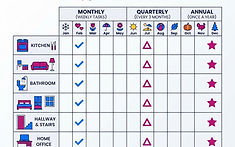
The smart pattern for most Newcastle homes is a weekly general clean with a quarterly deep clean and an annual carpet and upholstery restoration — the ongoing comfort of maintenance plus the periodic reset that keeps the soft furnishings from ever becoming a problem. You can request an estimate in 30 seconds with our Quick Estimate, or use the Quote Wizard to tell us about your rooms and book a date.
A comfortable home isn't a luxury. It's the foundation of rest, of family time, of being able to relax in your own space. Whether you do it yourself or bring us in, the system is the same — daily reset, weekly pass, monthly soft-furnishings, quarterly detail, annual restoration — and the result is a home that stays comfortable year after year.