
The appliances that quietly work harder than you think
Appliances are the unsung workhorses of the home. The fridge runs 24 hours a day, 365 days a year. The dishwasher, the washing machine, the dryer, the oven — each one quietly accumulates grime, scale, lint and grease on a schedule that most people never think about. And each one, neglected, fails earlier and costs more to run.
For Newcastle households, the moderately hard water and the coastal climate add a layer: limescale builds faster in kettles, coffee machines and washing machines; mould grows faster in the rubber seals of front-loader washers and dishwashers. The right care is mostly about frequency — a small regular pass is far more effective than an occasional heroic clean.
This guide walks through every major appliance in the home, with the right method, the right frequency, and the maintenance that extends the appliance's life and keeps it running efficiently.
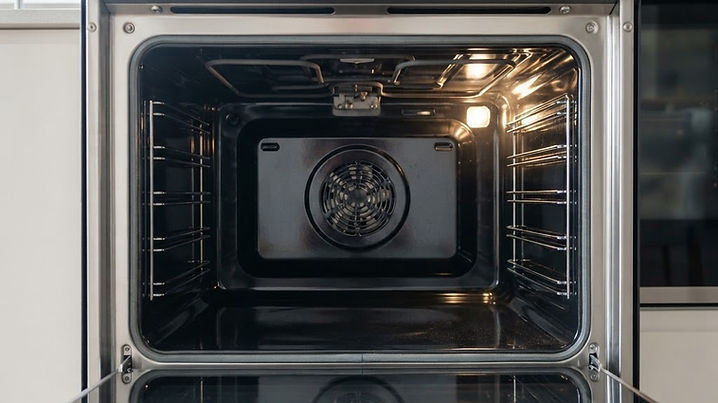
The oven: the appliance that benefits most from professional help
The oven is the appliance that accumulates the most stubborn grime — baked-on carbon that no amount of casual wiping will remove — and it's the appliance that most rewards a proper system.
Weekly: a quick wipe. While the oven is cool, a wipe of any fresh spills with a damp cloth. This is the habit that prevents a small spill from becoming a baked-on crust.
Quarterly: a full deep clean. Either the DIY method (a bicarb soda paste applied thickly to the interior, left overnight, then scrubbed and rinsed) or a commercial oven cleaner (follow the instructions, ventilate well, and protect the floor beneath the door — these products are caustic). The oven door glass responds to a bicarb paste and a non-scratch sponge. The racks can be soaked in the sink with dish soap and a splash of ammonia-free degreaser.
Annually (or twice yearly): a professional oven clean. A professional oven clean lifts the carbon that home methods leave behind, and it covers the elements, the fan, the door seal and the racks. For a single oven, expect to pay from $165 (including up to two trays); for a double oven, from $240 (including up to four trays); additional trays $15 each. A professional clean 1-2 times a year, with home maintenance in between, is the pattern that keeps an oven looking new for years.
Avoid: oven cleaner on a self-cleaning (pyrolytic) oven — it can damage the special coating. Don't spray cleaner onto the elements or the fan; spray onto a cloth and wipe. Don't use abrasive scourers on the glass — they scratch.
The fridge: the appliance that runs 24/7
The fridge is the appliance that runs constantly, and it's the one where a small regular pass makes the biggest difference to both cleanliness and efficiency.
Daily: a wipe of the handle and the door. A damp microfibre wipe of the high-touch surfaces (handle, door, water dispenser) takes 30 seconds and keeps the finger marks at bay.
Weekly: a check of the shelves. A quick scan for any spills or leaks (the bottom shelf and the crisper drawers are the usual suspects). Wipe any spill immediately — a spill left for a week becomes a sticky residue that's much harder to remove.
Monthly: an interior detail. Empty the fridge shelf by shelf. Wash shelves and drawers in warm soapy water (don't put plastic drawers back in wet — they warp). Wipe the interior with a bicarb solution (one tablespoon per litre of water) to neutralise odours. Check the door seals — a damp seal grows mould. Dry everything before reassembly.
Quarterly: a deep clean and a check of the coils. The condenser coils (on the back or underneath the fridge) collect dust, and dusty coils make the fridge work harder and cost more to run. Pull the fridge out, vacuum the coils gently with a brush attachment, and wipe down the back and the floor beneath. This is a 10-minute job that pays for itself in lower power bills.
Annually: a full empty and defrost (if applicable). A full empty, a clean of every interior surface, and — for a fridge with a freezer that isn't auto-defrost — a proper defrost. Check the temperature settings (fridge 3-4°C, freezer -18°C) and the door seal with the paper test (close the door on a sheet of paper; if it slips out easily, the seal needs replacing).
Avoid: abrasive scourers on the interior, harsh chemicals on the door seals (they degrade the rubber), and spraying cleaner directly onto the control panel — spray onto a cloth and wipe.
The dishwasher: the appliance that cleans itself least
The dishwasher cleans everything else, but it rarely gets cleaned itself — and a dirty dishwasher is the reason dishes come out with a film, a smell or spots.
Weekly: a filter clean. The filter at the bottom of the dishwasher collects food, and a clogged filter is the most common cause of a dishwasher that doesn't clean well. Remove the filter, rinse it under running water, and scrub with a soft brush if needed. This is a 2-minute job that makes a visible difference.
Weekly: a wipe of the door and the seal. A damp microfibre wipe of the door exterior, the handle, and the rubber seal around the door. The seal grows black mould fast if left damp — wipe it dry after the wipe.
Monthly: a clean cycle. Run an empty hot cycle with a dedicated dishwasher cleaner or a cup of white vinegar in the top rack. This descales the internal pipework and removes the grease and detergent residue that builds up over time.
Quarterly: a deep descale and a check of the spray arms. The spray arms have small nozzles that can clog with limescale — a toothpick or a pin clears them. A heavier descale (a stronger product or a vinegar soak of the spray arms) keeps the water flowing.
Annually: a full detail. Remove the racks, clean the interior walls and the base, descale the spray arms, and check the door seal for any splits or mould that won't come clean. A dishwasher that's properly maintained lasts 10-15 years; one that isn't often needs replacing in 5-7.
Avoid: regular dish soap (it foams and floods), abrasive scourers on the interior, and leaving the door closed between cycles — the trapped moisture grows mould in the seal. Leave the door ajar between washes.
The washing machine: the appliance that needs to be cleaned to clean
A washing machine that isn't cleaned regularly will start to leave clothes smelling musty, with spots of black mould on the door seal and a residue in the detergent drawer. The cause is almost always the same: mould and detergent build-up.
Weekly: a wipe of the door seal. After every wash, wipe the rubber door seal of a front-loader with a microfibre cloth. This is the single highest-return washing machine habit — a wiped seal stays clean for years; an unwiped seal grows mould within months.
Weekly: leave the door open. Between washes, leave the door ajar to let the drum dry. The trapped moisture is what grows the mould.
Monthly: a clean cycle. Run a 90°C cycle with a dedicated washing-machine cleaner or a cup of white vinegar, on an empty machine. This descales the drum and the internal pipework and removes the residue.
Monthly: a detergent drawer clean. Remove the detergent drawer (most pull out fully) and wash it in the sink with warm soapy water. The drawer accumulates mould and congealed detergent; a clean drawer keeps the wash clean.
Quarterly: a filter clean. The filter (usually behind a small flap at the bottom front of the machine) catches coins, lint and debris. A clogged filter causes slow draining and, eventually, a flood. Put a towel down, remove the filter, clean it, and replace it.
Annually: a full descale and a check of the hoses. In a hard-water area like Newcastle, an annual descale with a stronger product keeps the heating element efficient. A check of the inlet and outlet hoses for any bulging or cracking — a burst hose is a flood.
Avoid: using too much detergent (it builds up in the machine and on clothes), fabric softener (it leaves a waxy residue that builds up), and closing the door between washes.
The dryer: the appliance with a fire risk
A dryer that isn't maintained is a fire risk. The lint that builds up in the filter, the housing, and the vent pipe is highly flammable, and a hot dryer running with a clogged vent is the cause of dozens of house fires in Australia every year.
Every load: clean the lint filter. Remove the filter, peel off the lint, and replace it. This is the single most important dryer habit. A clogged filter extends drying time, costs more in power, and is the primary fire risk.
Monthly: clean the lint filter housing. The slot the filter sits in also collects lint. A vacuum with a crevice tool gets into the slot and removes the build-up. This is the zone that most people never check, and it's the one that causes the fires.
Monthly: a wipe of the drum and the door. A damp microfibre wipe of the drum and the door glass removes residue and the ink from labels (which can transfer to clothes).
Quarterly: a check of the vent pipe (for a vented dryer). The vent pipe that runs from the dryer to the wall can clog with lint. A flexible vent brush (or a vacuum with a long attachment) clears it. For a condenser dryer, a check and clean of the condenser unit (per the manual) is the quarterly job.
Annually: a full detail. A full clean of the drum, the door, the filter, the housing, and the vent pipe. A check of the power cord and the plug for any heat damage. A dryer that's properly maintained is safe and efficient; one that isn't is a risk.
Avoid: overloading the dryer (it extends drying time and increases lint), drying items with flammable residues (cooking oil, grease), and running the dryer when you're not home.
The microwave: the easiest appliance to clean
The microwave is the easiest appliance to clean, and the one where the right method is almost no effort at all.
Weekly: a steam clean. Place a microwave-safe bowl of water with a few slices of lemon, heat for 5 minutes, then leave the door closed for another 5. The steam loosens all the splatter; a wipe with a microfibre cloth removes it. This is the entire microwave clean for most households.
Monthly: a full detail. Remove the turntable and wash it in the sink. Wipe the interior walls, the ceiling, the door, and the seal. A bicarb paste lifts any stubborn splatter.
Avoid: abrasive scourers (they scratch the interior), and running the microwave empty (it can damage the magnetron).
Small appliances: the kettle, the coffee machine, the toaster
Kettle: monthly descale. Boil a 1:1 white vinegar and water solution, leave for 30 minutes, then rinse thoroughly (boil and discard two more lots of fresh water). In a hard-water area, monthly is the right frequency; quarterly for softer water.
Coffee machine: monthly descale and daily group clean. Use the manufacturer's descaling product or a citric acid solution, run the descale cycle, then flush with two full tanks of fresh water. For an espresso machine, a daily backflush with a group-head cleaner and a wipe of the steam wand keeps the coffee tasting fresh and the machine running well.
Toaster: weekly crumb tray. Empty the crumb tray, brush out the slots with a pastry brush, and wipe the exterior. A crumb tray left for months is a fire risk and a mould risk in a humid climate.
How Hearts Cleaning can help
For the appliance cleaning that's beyond a weekly wipe — a full oven clean, a deep descale of the dishwasher, a washing machine detail — we can help. Our professional oven cleaning is a flat rate: single oven $165 (including up to two trays), double oven $240 (including up to four trays), additional trays $15 each. Our deep cleaning at $88 per cleaner per hour including chemicals (four-hour minimum, from $352) covers the appliance detail work that comes with a full kitchen deep clean.
For ongoing maintenance, our general cleaning at $60 per cleaner per hour including chemicals (four-hour minimum, from $240) covers the weekly and monthly passes — the fridge wipe, the dishwasher filter, the microwave steam, the daily reset.
You can request an estimate in 30 seconds with our Quick Estimate, or use the Quote Wizard to tell us about your appliances and book a date. For an oven-only clean, the oven estimator on our oven cleaning service page gives you the price instantly.
The appliances are the workhorses of the home. Whether you do it yourself or bring us in, the system is the same — daily wipe, weekly filter and steam, monthly descale, quarterly detail, annual full restoration — and the result is appliances that run efficiently, last longer, and keep the home running.