The workplace that presents itself
For a Newcastle workplace — an office, a retail space, a professional suite, a small business — the standard of cleaning is a direct reflection of the brand. A client who walks into a spotless reception forms an immediate positive impression. A client who walks into a smudged glass door, a tired kitchen, or a bathroom that's been "given a quick wipe" forms an immediate negative one — and no amount of professional service overcomes it.
Commercial cleaning is also a workplace health and safety matter. A clean workplace reduces the spread of illness (and the staff absences that come with it), reduces the risk of slips and falls, and supports a culture where staff take pride in their environment. The standard isn't "looks clean"; it's "is clean", and there's a meaningful difference.
This guide walks through every zone of a commercial space, with the right method, the right frequency, and the standard that a detail-focused commercial clean is built around.
The commercial difference: consistency is the standard
The single biggest difference between domestic and commercial cleaning is the importance of consistency. A domestic clean can be "good this week, less good next week" and the household adapts. A commercial clean can't. Staff and clients notice the day the standard slips, and a workplace that's "usually clean" is a workplace that's losing the confidence of the people in it.
For a commercial cleaning provider, the standard isn't the best clean — it's the worst clean, repeated across every visit. This is why a written cleaning schedule matters. The schedule defines what "done" looks like, and it's the same definition every time, regardless of who's doing the clean. A commercial clean without a schedule is a commercial clean that drifts.
The daily clean: the zones that present the workplace
The daily clean is the work that presents the workplace for the day. Done well, it's invisible — the space looks "normal", which is the whole point. Done badly, it's the first thing anyone notices.
Reception and entry. The reception desk, the door handles, the lift buttons, the glass entry door — all the high-touch, high-visibility surfaces. A damp microfibre wipe with a mild spray, finished dry, takes a few minutes and sets the tone for the whole visit. The reception floor gets a quick sweep or a dry mop to remove the grit that the day's foot traffic will otherwise grind in.
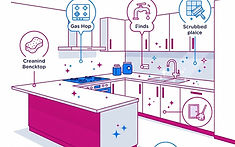
Kitchen and breakout. The commercial kitchen is the zone that gets dirty fastest. The daily reset covers: benches wiped and dry, sink empty and polished, dishwasher run or emptied, fridge exterior wiped, coffee machine wiped, floors swept and spot-mopped. The bins are emptied and relined. The microwave interior gets a steam clean (a bowl of water with lemon, 5 minutes, wipe). This is the same daily reset as a domestic kitchen, but it serves more people and runs harder — so the frequency is every day, not weekly.
Toilets and amenities. The toilets, the basins, the mirrors, the floors. A full daily clean: the bowl (brush inside, under the rim, into the S-bend), the seat and hinges, the exterior of the pan, the floor behind, the basins and taps, the mirrors (two-cloth method), the floor (sweep and mop), the consumables restocked (paper towel, toilet paper, soap). The toilets are the zone that most directly reflects on the workplace — a clean toilet is expected; a less-than-clean toilet is a lasting negative impression.
High-touch surfaces. Door handles, light switches, lift buttons, the photocopier buttons, the kettle handle, the fridge handle — every surface that gets touched dozens of times a day. A daily wipe with a disinfectant or a sanitiser keeps the viral and bacterial load down. In cold and flu season, this is the single most effective measure to reduce staff absence.
Floors — a quick pass. A sweep or a dry mop of the high-traffic zones (entry, reception, the path to the kitchen, the path to the toilets) removes the grit that would otherwise be smeared during the day. The full mop is the weekly clean.
The weekly clean: the full pass
Once a week, the commercial space needs the full pass — the work that keeps the standard from drifting.
Floors — the full vacuum and mop. All carpeted areas vacuumed (including under desks where possible, along the edges with the crevice tool, and in the meeting rooms). All hard floors mopped (sweep or vacuum first, then mop with a pH-neutral cleaner appropriate to the surface). The floor is the surface that sets the baseline for the whole space.
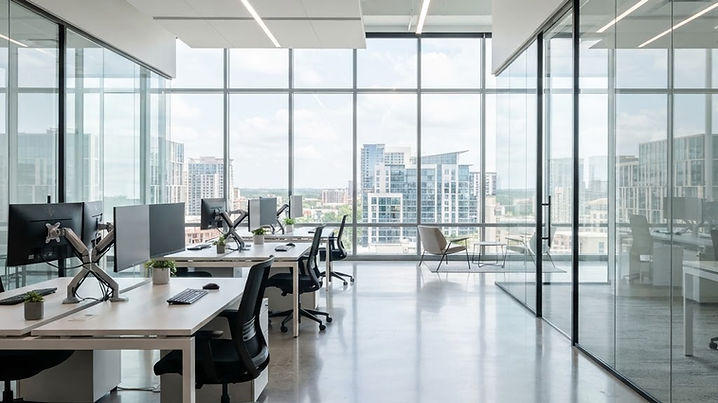
Workstations and desks. A weekly wipe of the desks, the monitor stands, the phone handsets, the keyboard area. A disinfectant wipe of the phone and the keyboard — the two surfaces that harbour the most bacteria in an office. (Desks should be cleared of papers and clutter by the staff first; a cleaner can't clean around clutter.)
Meeting rooms. The table wiped, the chairs tucked, the glass partition wiped, the floor cleaned, the whiteboard wiped (if applicable). A meeting room is a high-visibility zone — a smudged glass partition or a marked table is a presenting issue in every client meeting.
Kitchen deep pass. The weekly kitchen clean covers: the full bench detail, the splashback, the stovetop (if applicable), the inside of the microwave, the fridge exterior and handles, the sink descale, the dishwasher filter clean, the floors full mop. This is the kitchen reset that the daily clean maintains.
Internal glass and partitions. A weekly wipe of the glass partitions, the meeting room glass, and any internal doors with glass. Smudges and finger marks collect fast on internal glass in a workplace. The two-cloth method — one damp, one dry — leaves it streak-free.
Skirtings and architraves. A quick pass with a damp microfibre cloth. The horizontal ledges in an office collect dust at the same rate as a home, and they're just as visible.
Monthly: the zones that quietly accumulate
Once a month, the commercial space needs attention in the zones that build between weekly cleans:
Carpet spot-clean and edge detail. Any marks on the carpet treated with a carpet spot cleaner; a vacuum with the crevice tool along every edge where the carpet meets the skirting. The edges are where carpet beetles and moths can take hold, and where the dust accumulates that the weekly vacuum misses.
Internal glass and partitions full detail. A full pass of all internal glass, including the frames and the tracks. A smudge-free workplace reads as professional; a streaky one doesn't.
Appliance detail. The fridge interior (empty, wipe, check expiry dates — commercial fridges accumulate out-of-date milk and condiments fast), the dishwasher interior (filter, spray arms, a clean cycle), the coffee machine (descale, group head clean per the manual).
Behind and under fixed furniture. The filing cabinets, the reception desk, the meeting room credenzas — pull them out where possible and clean behind. The dust behind office furniture is genuinely surprising.
Light fittings and ceiling fans. A wipe of the pendant lights, the downlights (when off and cool), and any ceiling fans. Office lights collect a greasy dust that a dry duster just smears.
Quarterly: the detail pass
Every three months, the commercial space benefits from the detail work that mirrors a professional deep clean:
HVAC vents and ducts. The air conditioning vents and returns collect dust, and a dusty vent blows dust back into the space every time the system runs. A vacuum with a brush attachment, then a wipe, keeps them clear. This is the quarterly job that most directly affects air quality.
Full internal glass detail. Every internal glass surface, including the hard-to-reach high panels and the meeting room partitions. A full detail pass leaves the whole space brighter.
Carpet deep clean (high-traffic areas). A hot-water extraction of the high-traffic zones (entry, reception, the path to the kitchen, the meeting rooms). This lifts the embedded dirt that vacuuming can't reach. The difference in colour and smell is remarkable.
Skirtings, architraves and door frames. A proper detail pass — the ledges, the grooves, the top of the architrave. The difference this makes to how a workplace reads is out of all proportion to the time it takes.
Walls and marks. A wipe of any scuffs or finger marks with a mild cleaner. Office walls collect marks around light switches, at the height of chair backs, and in the meeting rooms.
Full disinfection of high-touch surfaces. A dedicated disinfection pass of all the high-touch surfaces — door handles, light switches, lift buttons, the photocopier, the kettle handle, the fridge handle. In cold and flu season, this is best done more often (monthly or even weekly), but a quarterly full pass is the baseline.
Annually: the deep restorations
Once a year, the bigger jobs that are beyond weekly or monthly scope:
Full carpet steam clean. A professional hot-water extraction of the entire carpeted area, not just the high-traffic zones. This is the single most impactful thing you can do for a commercial space — the difference in colour and smell is remarkable, and it extends the life of the carpet significantly.
Upholstery deep clean. The reception seating, the meeting room chairs, any upholstered surfaces. A professional upholstery clean annually keeps fabric looking new and removes the oils and grime that build up over a year of use.
External window cleaning. A full external window clean — the glass, the frames, the tracks, the weep holes. The difference in light and outlook is out of all proportion to the cost. For a multi-storey building, this is a specialist height-access job.
Floor re-seal or re-polish (hard floors). Depending on the surface — a re-seal for concrete, a re-polish for vinyl, a re-coat for timber. The protective layer that stands between the floor and the year's traffic.
Compliance audit. A review of the cleaning schedule, the SDS (Safety Data Sheet) folder, the chemical storage, and any industry-specific cleaning compliance (food premises, medical suites, child care all have specific requirements). A clean workplace is a compliant workplace.
Staff hygiene: the zones that protect the team
A few zones in a commercial space are specifically about protecting staff health, and they deserve a higher frequency than the general clean:
The kitchen sponge and tea towel. A kitchen sponge in a shared kitchen is a bacteria factory. Replace weekly (or use a disposable disinfectant wipe for benches). A tea towel should be changed daily in a busy kitchen.
The fridge. A weekly clear of out-of-date food (a "use by Friday" rule for shared fridges is the simplest system). A monthly interior clean. A fridge that isn't managed becomes a health risk and a smell source.
The dishwasher. A daily run (don't leave dishes overnight), a weekly filter clean, a monthly clean cycle. A dishwasher that isn't run daily grows mould in the filter.
The handles and switches. In cold and flu season, a daily disinfectant wipe of the high-touch surfaces is the single most effective measure to reduce the spread of illness through the team.
How Hearts Cleaning can help
For Newcastle workplaces, we provide commercial cleaning on a recurring schedule — daily, alternate-day, weekly, or a combination that suits the space. Our general cleaning is $60 per cleaner per hour including chemicals, with a four-hour minimum (from $240); our deep cleaning is $88 per cleaner per hour including chemicals, with a four-hour minimum (from $352). We work to a written cleaning schedule so the standard is consistent across every visit, regardless of who's doing the clean.
Here's what that means for your workplace:
- A written cleaning schedule. The schedule defines what "done" looks like, and it's the same every visit. Consistency is the standard, not occasional brilliance.
- Flexible scheduling. Before hours, after hours, or a combination. We work to your business hours, not ours.
- Commercial-grade products. Effective and safe when used as directed; eco-conscious and low-odour options available.
- A detail-focused standard. The zones most commercial cleaners skip — the edges, the tracks, the behind-furniture, the high-touch disinfection — are the zones we target.
- Quarterly deep cleans. A scheduled quarterly detail pass keeps the standard from drifting and catches the zones that build between regular cleans.
- Annual restorations. A scheduled annual carpet steam clean, upholstery clean, and external window clean keeps the space looking new for years.
You can request a commercial cleaning estimate with our Quick Estimate, or use the Quote Wizard to tell us about your workplace (the size, the staff count, the business hours) and book a recurring schedule. For a larger commercial space or a building clean, we'll scope the project and quote based on the actual requirements.
A clean workplace isn't a cost — it's an investment in the brand, the staff, and the culture of the business. Whether you manage it in-house or bring us in, the system is the same — daily present, weekly full pass, monthly detail, quarterly deep, annual restoration — and the result is a workplace that presents itself, every day.